Permanent Exhibition
Moving History Forward
OVERVIEW
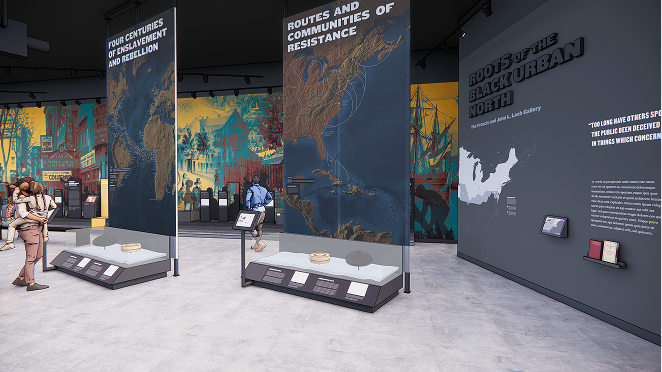
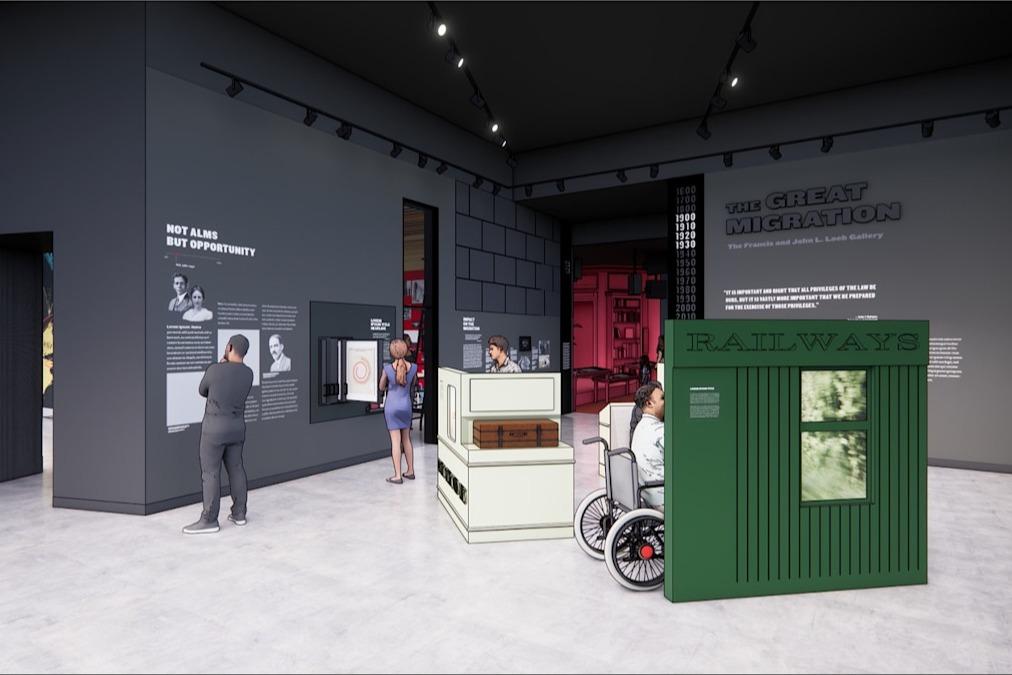
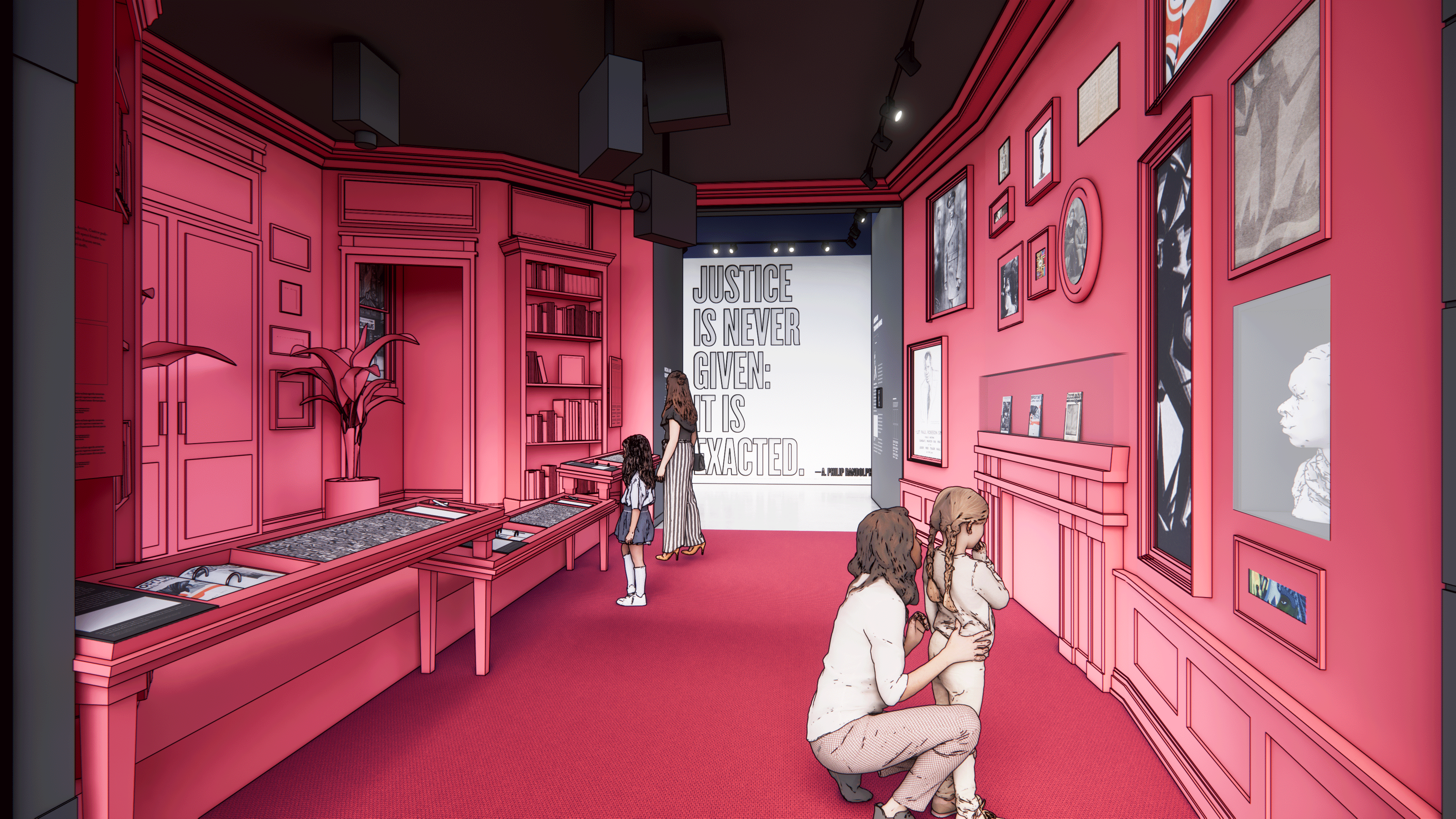
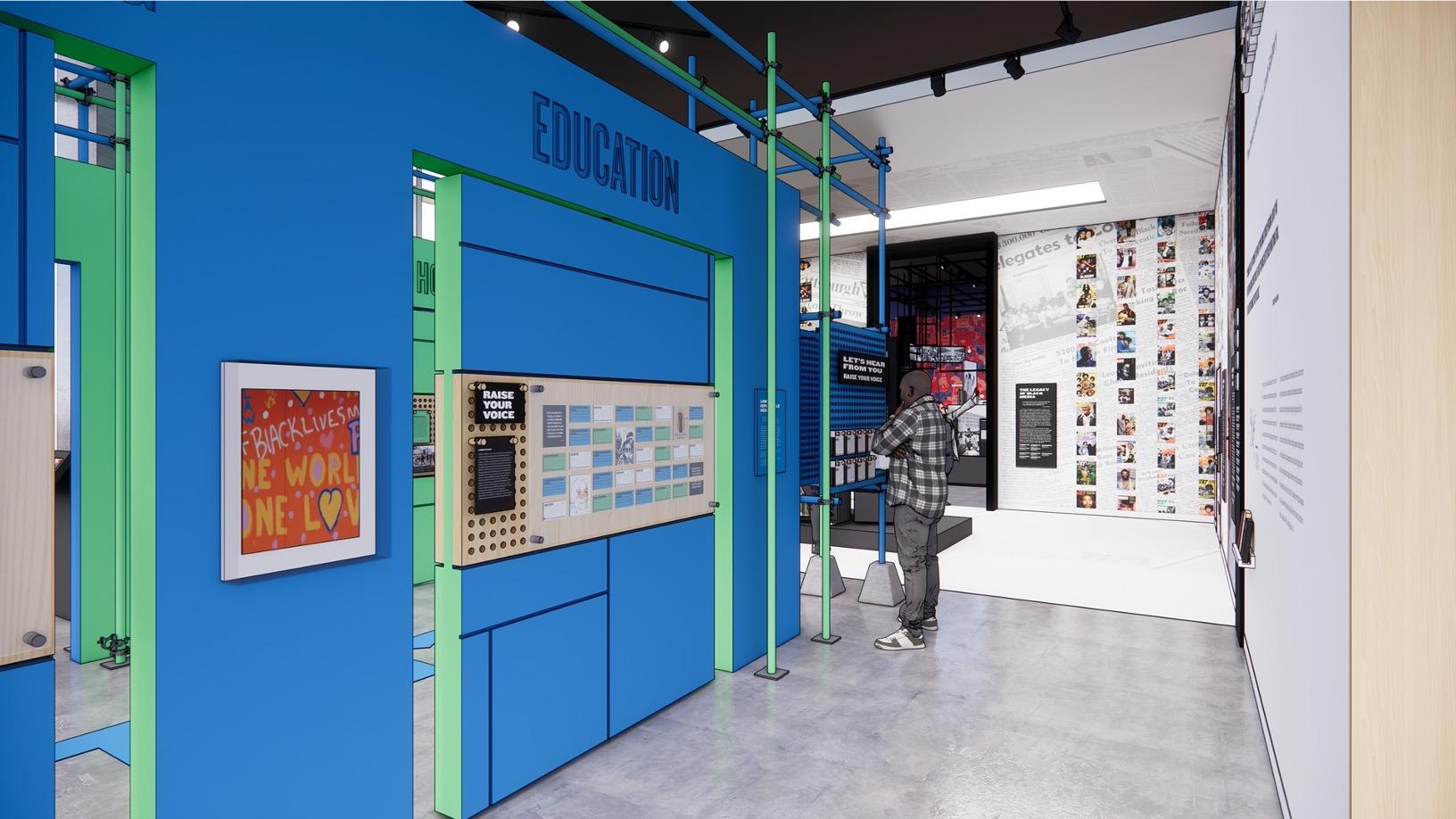
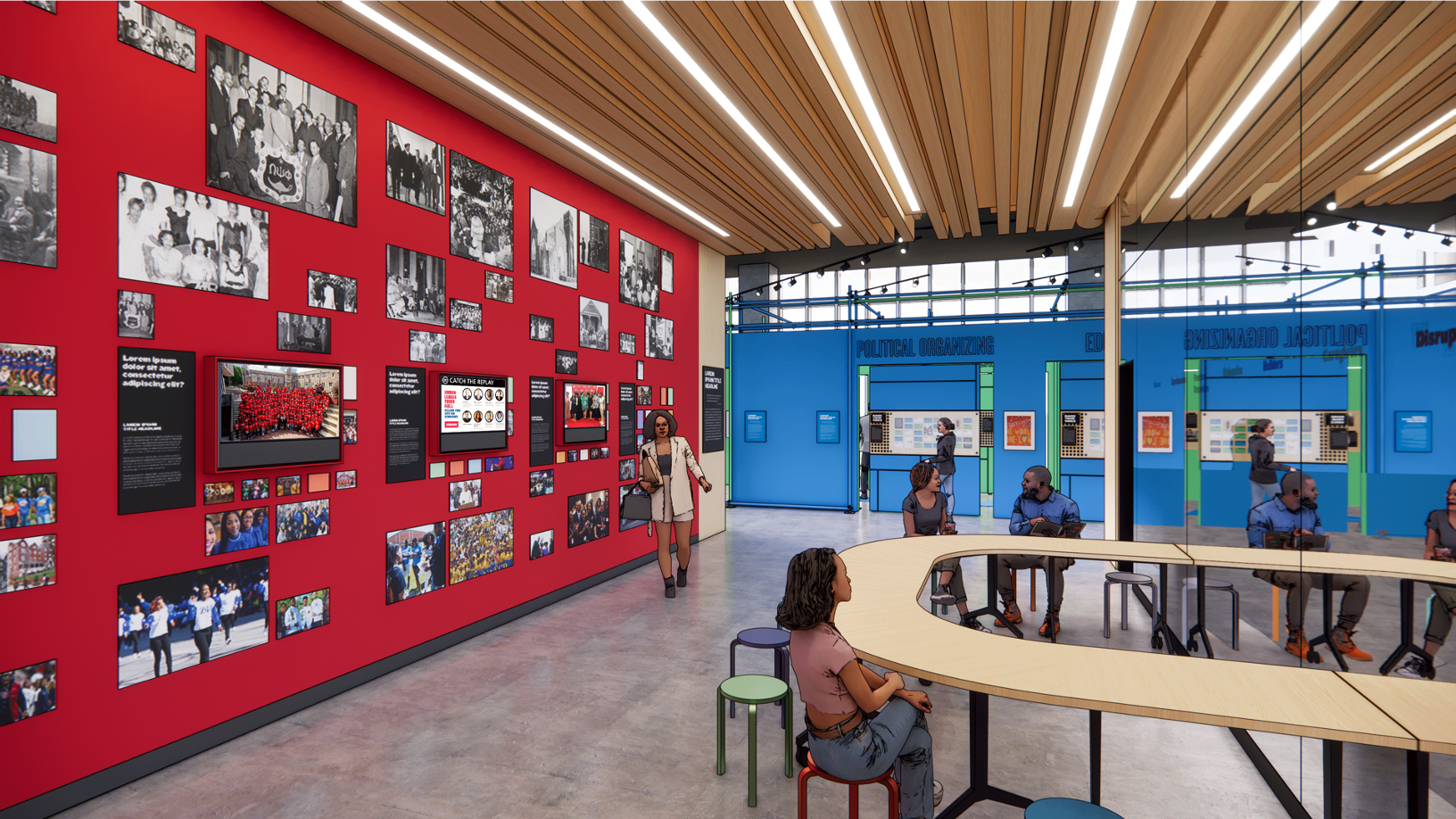
Moving History Forward, the Urban Civil Rights Museum in Harlem’s permanent exhibition, consists of eight galleries that interpret, document, and explore the long and ongoing fight for justice and civil rights in Northern urban environments across America. The galleries highlight major historic benchmarks in Civil Rights history, from the 1500s to the present day. In addition to an orientation gallery, a resource gallery, and a gallery of murals at our museum entrance, five additional galleries represent specific chronological historic eras of civil rights history:
Freedom Square (Orientation Gallery)
Changemakers Murals (4th Floor Lobby)
Roots of the Urban North (1500-1900)
The Great Migration (1900-1970)
The Harlem Renaissance (1920-1940)
Fighting for Justice (1940-1960)
Finding Our Way (1970-Present)
Seat at The Table (Resource Gallery)
KEY MOMENTS
1619: A Dutch ship arrived in Jamestown, Virginia carrying the first enslaved Africans in America.
1712: Twenty-four enslaved Africans revolted against their white captors in Manhattan, New York killing eight and wounding seven during the New York Slave Revolt of 1712.
1808: The Act of Prohibiting the Importation of Slaves officially ends the international slave trade in the United States, while illegal trade and the institution of slavery continue.
1827: The New York Legislature’s 1817 Act effectively ended slavery in New York State beginning July 4, 1827.
1865: The Civil War ends, and slavery is abolished nationally.
1865-1875: Three constitutional amendments were ratified during the Reconstruction Era: the 13th, 14th, and 15th Amendments that abolished slavery, granted citizenship, and ensured voting rights, respectively.
1896: The U.S. Supreme Court legalizes racial segregation; separate, but equal through Plessy v. Ferguson case.
1905: W.E.B. Du Bois founds The Niagara Movement, predecessor for the NAACP.
1910: Formerly known as the The Committee on Urban Conditions Among Negroes, The National Urban League (NUL) was founded in New York City on September 29, 1910 as a social service organization supporting African American journeys during the Great Migration.
1919: The Red Summer occurs involving white-led mobs carrying out riots and lynchings across the United States.
1900-1970: During two waves of the Great Migration, nearly 6 million people migrate in a mass exodus from the South to Northeastern, Midwestern and Western states.
1920s-1930s: The Harlem Renaissance, an artistic, cultural and political movement, centered in Harlem peaks.
1954: Brown v. Board of Education decision rules that “separate, but equal” facilities were unconstitutional.
1964: President Lyndon Johnson signs The Civil Rights Act into law, prohibiting segregation and discrimination in public spaces, schools and employment.
1965: President Lyndon Johnson signs key legislation, the Voting Rights Act to ban discrimination in voting and voting suppression.
1968: Civil Rights Leader Dr. Martin Luther King Jr. is assassinated in Memphis at 39 years old.
1968: The Fair Housing Act outlaws housing discrimination based on race, color, religion, and national origin.
1984: The AIDS crisis became a global health epidemic that disproportionately affected African Americans due to structural inequalities and limited healthcare access.
1992: Black communities across the U.S rise up against police brutality following the acquittal of four police officers who ferociously beat Rodney King in Los Angeles.
2008: Barack Hussein Obama elected as first African American president and serves two consecutive terms through January 2017.
2014: Eric Garner was killed by the police in Staten Island, New York while being arrested and held in an illegal chokehold. His final words “I cannot breathe” reverberated across the world.
2020: A Minneapolis policeman murders George Floyd, a 46-year-old Black American man, sparking worldwide public protest against police brutality.
2026: Black History Month turns 100, marking the centennial of its founding by Carter G. Woodson.
2026: The National Urban League opens and The Urban Civil Rights Museum in Harlem on the 4th floor of its new building The Urban League Empowerment Center.
Key Objects
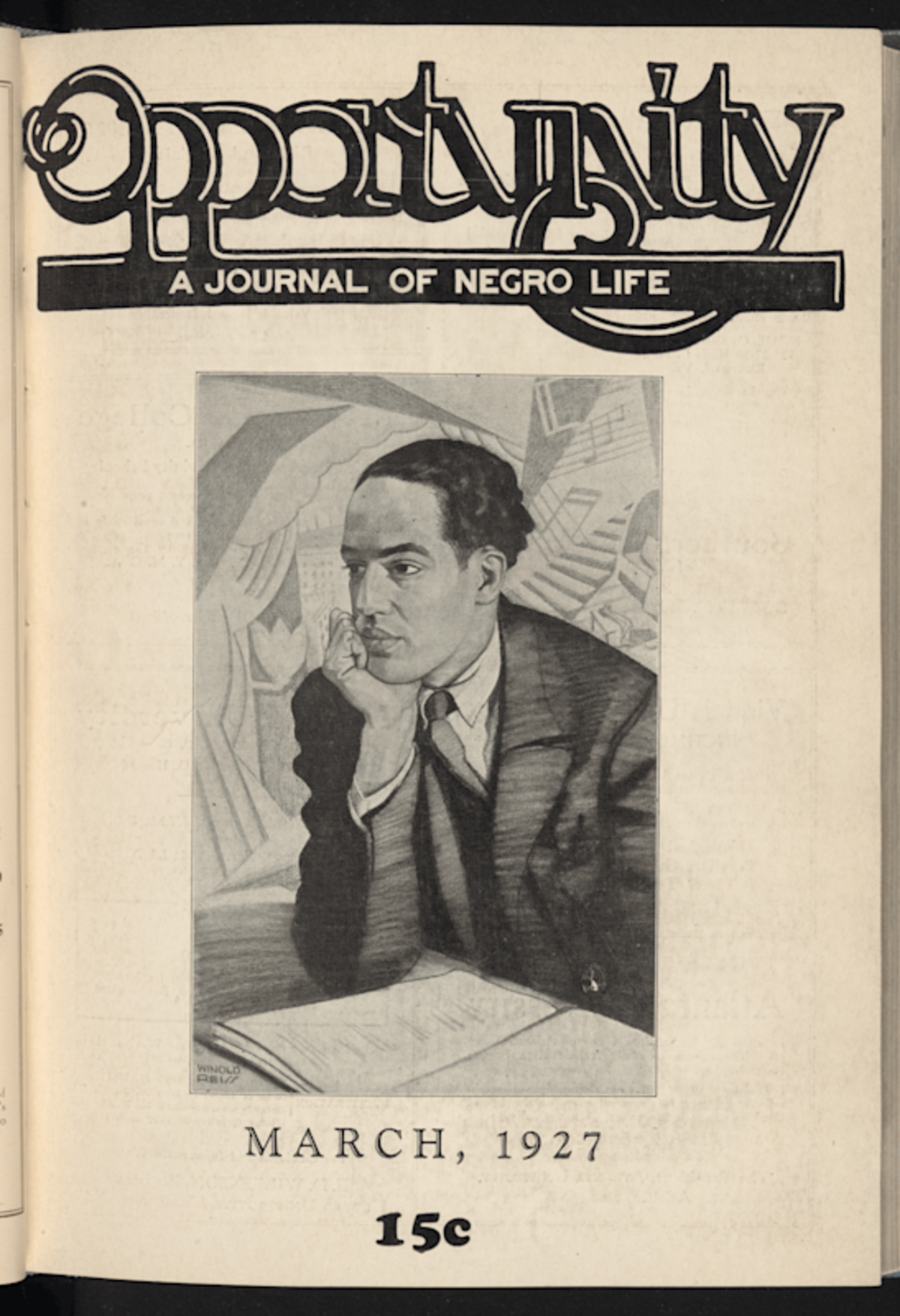
Opportunity: A Journal of Negro Life
Published in March 1927, this portrait of Langston Hughes was created by Winold Reiss.
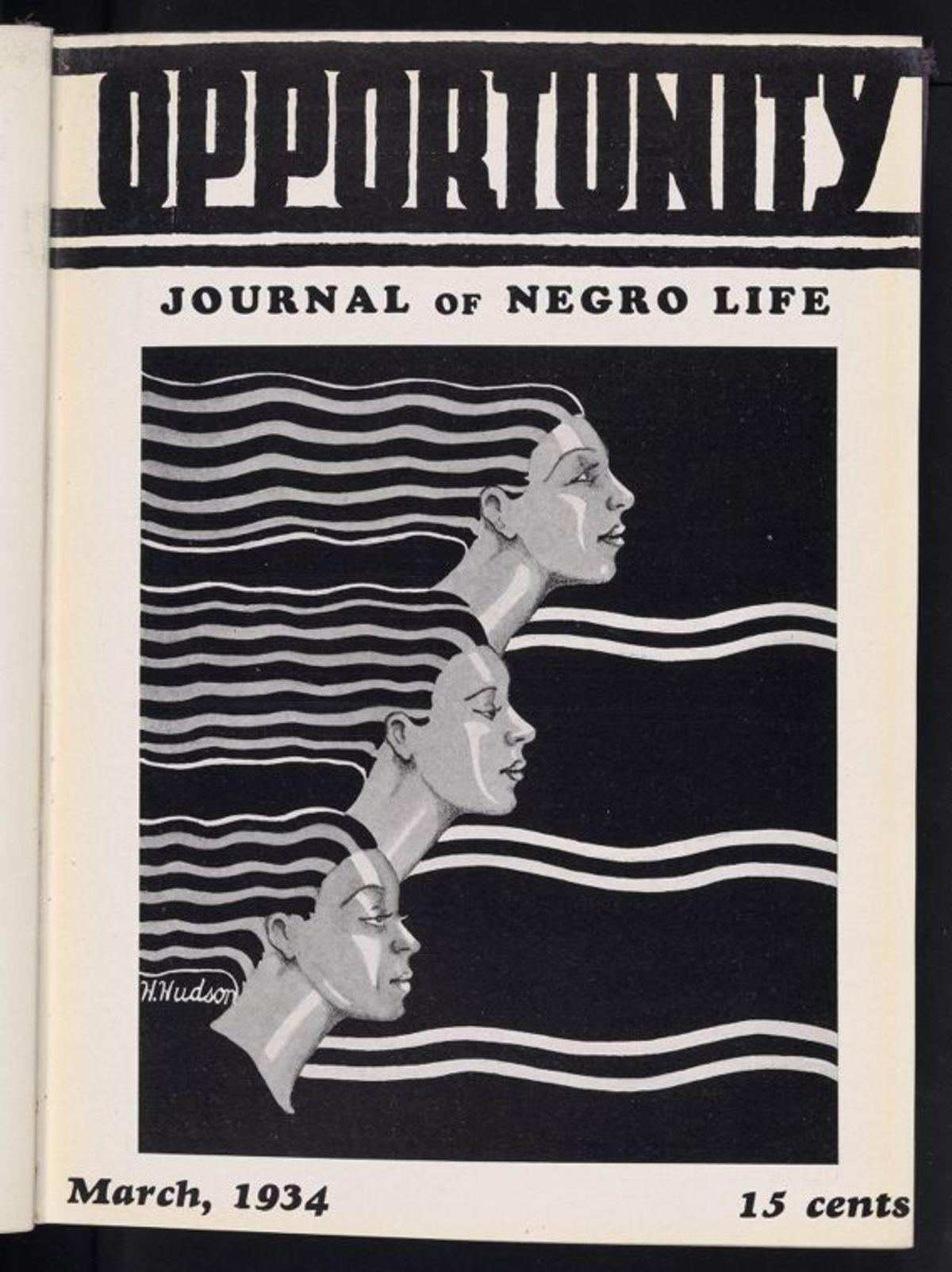
Opportunity: A Journal of Negro Life
Published March 1934, this Opportunity cover features art work by H. Hudson.
Thank You to Our Partners